• Leonardo Tissot
  • Home
  • Terms
  • Link.tree
  • Email
Créditos: Blackboard/27zero 

No primeiro semestre de 2022, tive a oportunidade de realizar trabalhos de tradução, localização e revisão para a língua portuguesa do livro "Legacy Conversations — Latam Edition", da Blackboard, desenvolvido pela agência 27zero, de Bogotá (Colômbia). 

A obra traz 22 perfis de reitores de universidades latino-americanas, que compartilham detalhes a respeito de suas carreiras e desafios como líderes do setor de educação superior. Originalmente redigidos em espanhol, os textos também têm versões em inglês e português.

Share
Tweet
Pin
Share
No comments
Director Philipp Reichenheim and Dinosaur Jr. guitarist/singer J Mascis 

This week I got a chance to discuss the documentary Freakscene: The Story of Dinosaur Jr. with director Philipp Reichenheim. The film is on cinemas in the United States right now and you can also stream it from your home.
 
Philipp, how did the movie premieres go in New York and Amherst?

It was really, really super fun. The first one was in Brooklyn, NY, in The Opera House, and it was combined with a live set from J. He played four songs and then we did a Q&A before the film. It was fantastic, we sold out, there were 600 people there. And in Amherst, MA, it was particularly crazy, since the whole band was there, under one roof, watching the film in their hometown. There was also a really long Q&A with all band members and me, and that was really fun and emotional, you know? Like, it was really crazy for me, to have everybody together talk about the film, as well as the conflicts within the band, and everybody was able to say whatever they wanted. All band members were very excited and were even saying that the film had a therapeutic effect on them, in a positive way.

That’s interesting. Can you tell me a little about how this project came about? Last year I had a chance to interview Murph and he told me it was already 10 years or so in the making, is that right? 


Yeah, there was no deadline or anything… In 2009, J and I decided, after doing a live DVD for the band, with interviews and bonus materials: “Hey, how about we make a documentary about Dinosaur?”. It took a really long time to get the funding together. But then I found my partners of Rapid Eye Movies, in Germany, and they made it all happen. In 2018, we basically started to get the funding and the film was done in 2020, right when the german lockdown started in Berlin. We were done with the movie and boom, we were not allowed to go out anymore. So that was kind of crazy. Also, it took time to get the movie to be played at festivals. We didn't want to do too many online streaming film festivals, so it was not easy for a while, but last year we released it theatrically in the UK, Japan and Germany. Now we teamed up with Utopia for the US and the rest of the world, and that is really exciting that finally the film is released on Dinosaur Jr.’s homeland, you know? We are getting great feedback from the audience. People are reminded of the energy of loud music. We made the audio lines for the film really loud, so when you're in the cinema there's an amazing 5.1 noise turbine the whole time.


How difficult was it for you to find footage from the band? Did the guys already have most of it or did you have to do a lot of research?


It was a mix of a lot of different things. I did, of course, research over the years and the band gave me their archive. And then a Massachusetts-born Dinosaur fan, who is also kind of a music video collector, he actually knew a lot of people who had original material as well. He even tracked down the scene where J and Lou have a fight on stage, in Connecticut. 


That was a really interesting scene.


Yeah, I think so too. It was insane. So he helped me with that as well. And Lee Ranaldo supplied me with really early tour footage of the band, when they were touring with Sonic Youth on the EVOL tour. So I was lucky that there were amazing sources of footage available — and photographs as well. And the amazing artworks of all the artists, like Maura Jasper, who made album covers, or the photographs of Johnny Vegas. I’m really happy that we all made it work out, and that people seem to like the film. It's a very fun time right now. They are showing the film in more than 80 cinemas nationwide. 


Tell me a little about your relationship with J. I mean, he is your brother-in-law, your sister Luisa actually appears in the film. But did you already know Dinosaur Jr. before they got married or their relationship was what made you get to know the band and become interested enough to make a film about them?


I was a Dinosaur fan from day one. We had the first album in Germany. When it came out, I loved it right away. It was the soundtrack of my youth, in a way, with other loud music. And I just loved it. And I was lucky, in 93 I met J through my sister. They were only friends at the time, and we connected right away. I did the artwork for J’s acoustic album Martin + Me, I did Dinosaur videos and live DVDs, so there's a long history of friendship and creative collaboration between us. Then, in 97, it happened that he and my sister got together. They were friends and somehow they became a couple. They're still happy together, they have a child and it's cool. He supports the project 1,000%. Although sometimes he was like, “I’m not sure if you’ll ever finish this”, but here we are now.


And how was it to make a film about someone who is actually in your family? Was it an additional challenge or did it put any more pressure on you…? I mean, did J have any input on what you could use or not, on how deep you could explore the conflicts within the band…? Did you have to get his approval or did he give you complete freedom to develop the project?


Yeah, it is a curse and a blessing. On one hand, it challenged me to be super professional on many different levels, from the contracts and licensing, we all had to work stuff out. And then the content. But J didn't have any demand. He didn’t ask for any early inputs or previews or anything. He basically saw the film when it was done, which was a big risk for me. But I thought the whole time that we gave our best, so I could stand in front of him with a good feeling about it. When he saw it, he liked it right away. But then I went on another tour with them, so we had some more additional edits into the film. But apart from that, it was total freedom. It was a long ride, but a really exciting one.


To me the film seems like it is almost an oral history of the band. I mean, you don’t have a narrator, nothing is really “overexplained” or shown in a more traditional way, except from what the band themselves and the other guests are saying. I mean, I believe someone who never heard of Dinosaur Jr. might not totally get what the band is all about just from the film, it seems like you needed some prior knowledge on the band before watching it. Was that intentional?


I think we might have tried, since the music and the characters are so unique — they're not narcissistic or self-orientated — so, we kind of left it a little rougher and raw on that side, as well as content-wise. I think that the movie explains the important things that people have to know, but leaves a lot of free interpretation, with the music itself. It's still a music documentary, but we decided to make it a little bit more mysterious. It’s the band itself. They're not the Foo Fighters, you know? And maybe the whole approach kind of projected back to the film. I heard from many people who didn't know them as well, people from completely different generations, people who are 85-years-old in the audience, and they were music lovers and they loved it, even without knowing anything about the band. So it's always a personal taste thing, what a documentary should transport for each individual. I think we left it loud and a little bit rough, and I felt that's good for the kind of band we are documenting as well.


You have a lot of people in the film talking about the band, from Kim Gordon, to Thurston Moore, to Frank Black, to Matt Dillon… Who was the hardest person to reach for this project? And is there anyone you wanted to interview but who wasn’t available?


Yeah, there were two characters… The hardest character to reach was my brother-in-law himself (laughs). He doesn't like to do interviews. And even though we spend so much time together — we're really close and we can talk about anything — it was hard to get him to do his interviews. I was able to do only two interviews with him, over all the years of making the film. I have to say, I wish I would have had him for more interviews, sometimes, about some topics in the film. I could have brought more light into it. But apart from that, I wasn't able to talk to Gerard Cosloy, who was the Homestead Records boss — he kind of discovered Dino and put out the first record. I think he's now a part of Matador. But somehow our paths never crossed, which is kind of sad. Also, Nick Cave — we nearly met one time, for a short moment. There were many people where, you know, suddenly there's a chance to talk to them, but something changes and it ends up never happening. So, yeah, I would say J and Gerard were the most difficult to get for the film.


It's funny that you say that, because most of J’s interviews that I've seen, he really kind of mumbles a few words and it's kind of difficult to really get what he's trying to say most of the time. It's interesting to see that you have that same difficulty.


Yeah, you know, the thing with J is he needs time to answer, and often people don't give him the time he needs. Then people maybe just think that he didn’t like the question, and they come up with a new one. And then when he's ready to answer, people have already moved on to a different question. Sometimes his approach is really weird, but he said it himself that interviews are, for him, an abnormal exchange of information, and that says it all about him.


Did you try to reach out to other band members, like Mike Johnson, George Berz, even Van Conner, from the Screaming Trees, who briefly joined the band…? Or was it intentional to focus just on the three guys from the original lineup?


We tried to reach Mike Johnson over different channels, but never got an answer back. I have no explanation why. When the whole project started, I knew that the main focus was on the original members, that it has a beginning and an end, and a clear storyline to concentrate on. And the moment I realized more and more that Mike is not responding, I didn't ask George, because I thought that there would be no balance, in a way. So I had J and Murph talk about these moments. I really never heard from Mike Johnson, even though I met him in the first years, when he was in the band. I was making my first 60 millimeter shots with the band in Hamburg and Amsterdam in 95 and he was there as well.


The film was already released in Europe and now in the US and Canada. Do you plan to bring it to South America and other parts of the world?


Yeah, I'm sure we will. The thing was, we started the film’s release last September in Germany. Then, in October it was in the UK, then this last March we put it out in Japan. So we will definitely bring the film to all Dinosaur Jr. fans’ territories, that's for sure. Now we have Utopia dealing with our world distribution and they're really fast and spreading the film. I’m very positive that this year or the next Freakscene will go more around the globe, including Brazil, Australia, New Zealand, Europe, and more parts of Asia. There's even people from Russia writing to us — like, no Putin fans — so it's really exciting how many Dinosaur fans already heard about it and want to see it. It's so crazy, because as a filmmaker, you have an unconscious hope and vision for something, or you wish that something can happen with the film, but when it actually happens, that's so crazy for me now, to watch how the press and how many people were interested. It seems that the US release is going really well, so I'm just really happy about it.


Great. And do you plan to release it on DVD/Blu-ray as well?


Yeah, there is already a German Blu-ray with a lot of amazing “best of” footage. We have a full three hours of features on the disc, and I think there will be a US Blu-ray and DVD release as well. There are bonus materials like the whole 1987 Dinosaur live show in Germany, then additional stuff about the band. You know, Mark Lanegan, who passed away recently, he was interviewed many times, and I kept what he had to say for the bonus materials. After I finished editing everything, Mark passed away just five days later. So it's kind of sad that he never saw this. There are about 10 more minutes of additional interview footage with guests and the band, and two whole live shows, so it's fun.


What are you working on these days? Any chance you might make other documentaries about music or other alternative bands from that golden era of the 80s and 90s?


Yes! I am about to start a full cinematic documentary, like Freakscene, called Riot Zone. It's about the electronic punk band Atari Teenage Riot. Alec Empire (band founder) is my oldest friend and neighbor, and his career started when he was 12. Since the beginning, I filmed him and I have basically his whole career on tape, and there is a great storyline for the golden era of 90s electronic punk and rave culture. They were amazing. We toured with Rage Against The Machine and Wu-Tang Clan through the States, and Atari was quite big in the UK and Japan as well. There were riots, they played and got arrested, it’s all on tape. It's a really, really punk vibe and, of course, there’s other protagonists passing by, who were starting their careers as well, like Aphex Twin and Prodigy. So it will be a great document about the 90s. And I have a thriller written already for about two or three years that I’d like to do as well.


Share
Tweet
Pin
Share
No comments

Foto: Divulgação | Reprodução Scream & Yell 


This article is available in Portuguese only.

Participei da coletiva de imprensa do guitarrista Tom Morello (Rage Against the Machine, Audioslave, Prophets of Rage) para jornalistas brasileiros. Morello lançou o álbum solo The Atlas Underground Fire em 15 de outubro de 2021 pela gravadora Mom + Pop Music. A seguir, você lê um trecho da reportagem publicada no Scream & Yell. 

Com uma carreira que já percorre três décadas, Tom Morello não parece estar nem perto da linha de chegada. O guitarrista de Rage Against the Machine, Audioslave e Prophets of Rage está lançando “The Atlas Underground Fire” (Mom + Pop Music), trabalho solo em que divide os holofotes com artistas da velha guarda e talentos da nova geração. O álbum é uma sequência de “The Atlas Underground”, lançado em 2018.

O risco de fazer o primeiro pit stop em mais de 30 anos, em função da pandemia, foi assustador para o criador de riffs e licks emblemáticos do rock, como os de “Bulls on Parade” e “Like a Stone”. Ele mesmo revelou seus medos e ansiedades durante o período, em entrevista coletiva para a imprensa brasileira. “Desde que eu tinha 17 anos até março de 2020, estive constantemente compondo, gravando e tocando ao vivo, e tudo isso simplesmente parou de repente”, lamenta.

Para piorar, a falta de habilidade com a tecnologia dificultou ainda mais os dias de isolamento social para Morello. Apesar de ter um estúdio na casa onde vive com a família, na Califórnia, o músico admite que não domina os equipamentos. “No máximo, me deixam tocar no botão de volume”, brinca. De que maneira, então, “The Atlas Underground Fire” ganhou vida?

Leia a matéria completa no Scream & Yell.
Share
Tweet
Pin
Share
No comments
Foto: Divulgação | Reprodução Scream & Yell 

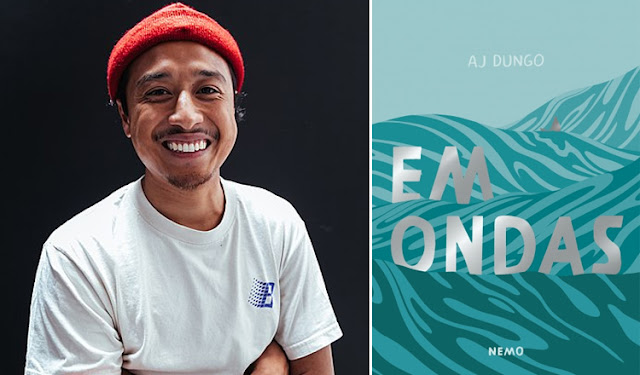
Entrevista publicada originalmente no Scream & Yell, em português. AJ Dungo é autor de Em Ondas, graphic novel lançada em 2021 no Brasil pela editora Nemo. 

Below you can read my interview with author AJ Dungo, regarding his graphic novel In Waves. This was originally published in Scream & Yell, in Portuguese.

Can you tell us a little about how In Waves came about? It is obviously a beautiful tribute to Kristen, but I read that you were already thinking about doing a project on surfing before you started it. If that is the case, how did the idea to merge both project came about?

So, I took a class when I was in my graduating term at art school called “Ancient/Modern.” It was a class focused around one project that we would create during the term. The objective of this project was to share an aspect of California culture to someone that was not from California. At the end of the class we would present our work in London. For two weeks, with my classmates and teachers, we shared our work with various creative professionals; animation studios, advertising agencies, graphic designers, and book publishers.

For my project I chose the famous surf figure Tom Blake, as suggested by my instructors. I created a box filled with printed ephemera from Tom Blake’s life. I spent hours in the printmaking shop lining the box, making accordion fold silkscreen prints, making a set of risograph prints, pressing a set of buttons with Tom’s photography, printing a zine filled with tiny graphite drawings of famous surf photos, and pulling a newsprint poster. I tucked all of this away into a 5” x 7” box that I silkscreened the covers of. I made an edition of 15 or so to deliver to each of the contacts we were to meet in London after graduation. It was this special box that piqued the interest of one of our contacts in London. It was the contact that I was most looking forward to meeting; Nobrow Press.

After our Nobrow presentation, my teacher pulled me and a classmate aside to tell us that our presentations went very well and that we should expect a call from them.

Two months later I received an email from Sam asking to Skype with me to discuss working with Nobrow to create a book. He was interested in making a picture book about the pioneers of Surfing and Surf Culture in North America. We corresponded on and off for a few weeks while he had me brainstorm ideas.

Eventually he was less interested in the initial idea of a straightforward historical picture book and wanted a more personal narrative. So he asked me about my relationship to the sport and why I was drawn to it in the first place. I told him that Kristen was the reason I got into surfing. I told him all about her, about our relationship, and about her recent death. By the end of the conversation Sam was intrigued and had suggested I find a way to intertwine the two histories together. He gave me a list of two books to read regarding grief and multiple intertwined storylines that fused past and present. “A Short History of Tractors in Ukrainian” by Marina Lewycka and “H is for Hawk” by Helen Macdonald. Both books combine personal stories alongside historical writing. Long story short, my publisher suggested that I explore merging the two stories.

Kristen has only one line in the comic (I mean, one dialogue balloon). Nevertheless, she is a very expressive character in her attitudes throughout the story. Did you choose to portray her this way because that's how she was in real life (I mean, a quiet/reserved person), or is there some other storytelling reason behind it?

That’s a very interesting and acute observation. Kristen could be quiet and reserved at times but not always. She was full of life. She was so funny and witty and smart and kind. The book in general lacks a lot of dialogue. These were quiet moments and specific feelings that I wanted to portray and capture. A lot is said through our actions. Also this story is incomplete. It always will be without Kristen’s input. This is my flawed recollection of precious moments to me. If she were here with me, this book would be so much more vivid and her voice would give it more depth and probably a longer page count.

About your choices for In Waves' color palette: the colors are really beautiful, yet simple. And it's obvious that there's separate palletes for each story you are telling here, but I'd love to know a little more about how you chose the warmer and colder tones and if you were trying to express something else with them, besides helping to guide the readers while they moved forward in the story.

The reasons are a bit simple and straightforward. The sepia brown tint is reminiscent of old fraying newspapers, aging film, a throwback and nod to the past that is sort of a default in our collective consciousness. The blue was chosen for a few reasons. Blue was Kristen’s favorite color, blue is the color of the ocean, but mostly I chose this color because I was feeling very blue when I wrote this book. I correlated the blue tone with my mental and emotional state during the writing process.

How involved are you in the animated version of In Waves that is being developed? Do you know at what stage production is? When can we expect its release?

I’m not completely hands-on in this whole process. I’m a bit like a consultant. There are scriptwriters that have reached out for more back-story on Kristen’s life and my life. I was told they might need me later on to help provide some new drawings for a certain part of the film. Silex Films, the production company, pitched the project in development at the Annecy Film Festival. The movie is expected to go into production at the end of 2022 for a delivery in late 2024. It’s all very exciting but this story has sort of a life of it’s own at this point.

In Waves was your first graphic novel. Have you already started thinking about its follow-up? Do you already have any other projects in mind? If so, can you share a few details about it (storyline, characters, or at least a theme or title)?

I’ve definitely been toying with some ideas. It’s the main question on everyone’s mind at this point. Writing In Waves was very draining; physically and emotionally. I think I’ve had enough distance from that experience to start something new. I have been thinking about exploring short stories or some sort of shorter length project. I’ve also thought about another graphic memoir but exploring some different themes that are more cultural and familial. Mostly I’m just trying to make time to surf and skate and enjoy my time away from work.

Here is a question sent by your translator in Brazil, Érico Assis: the "disease graphic novel" is a genre by itself. Have you read any of those before writing your own? Did you have to break any barriers to convince yourself - or to convince your editors - that it was worth it to tell your story among so many other biographies and autobiographies about tragedies? How did you do it?

When I was in art school I was required to read Alison Bechdel’s “Fun Home.” To me this book is the quintessential “disease graphic novel,” as you put it. I’ve definitely explored books of this nature before writing this book but I don’t think I dove into this project thinking I’m going to write a disease graphic novel. I was writing the story of my best friend. 

I think the barrier to entry for me was myself.

At the start of this project, I was given a certain amount of time to produce drafts for Nobrow but I felt too much pressure to even begin. The pressure being that I was still processing what had happened to Kristen and that I had a full time job that kept me from having more time to work on the book. I didn’t even know if the timing was right for me to be telling her story. I feared that it was much too soon. The anxiety I was feeling paralyzed me. I had actually typed up an email thanking Nobrow for the opportunity but that I was unable to follow through with our book.

Eventually, I thought about Kristen. Her hopes and dreams for me were always to make books and comics and art that could inspire others. She would constantly tease me, saying that I would write a book about her one day. I took those light suggestions to heart, picked up my pencil, and deleted that email.


Share
Tweet
Pin
Share
No comments
Foto: Divulgação 


Entrevista publicada originalmente no Scream & Yell, em português.

This interview with Seattle-based band The Black Tones was originally published on Scream & Yell, in Portuguese. You can read it in English below.

Guys, to start the interview, please tell me how you are doing in the past months. Fully vaccinated and healthy, I hope. But how has the pandemic affected your work as a band?

Eva: Yes, we are definitely fully vaccinated and hoping to stay healthy! You know, like a lot of other artists, I would have to say the cancellation of shows had been the biggest thing. I LOVE performing live, it’s what I get most excited about with sharing our music, more than recording, more than making a video, live performance has my heart. To not be able to do that was awful.


Cedric: Yes I am fully vaccinated and doing my best to stay healthy as well. It was definitely hard to watch all the shows that we had cancelled. We were just about to do our first south by southwest show down in Austin,Tx and it had been something I was really looking forward too. The pandemic did force us to get really creative with how we performed. We did everything we could to still perform and did many livestream and pre recorded videos. It's been an interesting time for all artists I am sure. 


I saw that you guys released a few singles in 2020. Were those songs written and recorded during lockdown or were they done before the pandemic hit?


Eva: Two of the songs, which were released by Mike McCready (Pearl Jam) through his HockeyTalkter label, were recorded just prior to lockdown. The day it was released, we had a big release show at Easy Street Records here in Seattle, completely packed and sold out. That was our last performance, because in the next couple of days lock down started. The single My Name’s Not Abraham Lincoln, was the only track recorded during lockdown and is our western saloon style song about lack of representation of black people which further contributes to ongoing stereotypes of black americans. This was written not too long after George Floyd’s murder.


Do you have plans to release new music in 2021? Is a follow-up to Cobain & Cornbread a possibility? Or are you just going to play live?


Eva: You know, I really take this stuff day by day. If a whole record comes out of me at that moment, then we will make it. If it doesn’t, it doesn’t. I never force these things out. I may write a record in a week or not for another year. It just has to be authentic. We will definitely play live as long as the pandemic allows us to.


Cedric: I am totally in agreement with Eva on this. If something comes out then great but forcing anything is definitely not in the cards. Really I’m just excited that we get to play some live shows again. Hopefully live shows can stay back as long as we are all doing our part to fight this pandemic


Tell me a little about how the band started. I read that, at first, Eva was kind of secretly developing her career as a musician, and after Cedric saw her perform for the first time, he learned how to play drums to form a band. Is that true?


Eva: Cedric did come watch me perform after I finally decided to invite my family to a performance. I was too nervous to play in front of them when I was starting off, but when I finally felt confident enough to let them hear me, I invited them. Cedric and I are really close, as close as twin siblings can possibly get, and even he didn’t know I could sing and play guitar. He told me after the performance that he wanted to back me up, support me on an instrument, and asked if I could teach him drums, so I did. There would be no band if it wasn’t for Cedric investing in me and my songs. He’s the main reason this all started.


Cedric: Yes! Eva had been singing in high school and hadn't really told anyone in our family yet. I knew she had played guitar but what caught me by surprise was when I first had the chance to hear her sing. She had this absolutely outstanding voice that moved me so much. I had told Eva as she mentions to teach me how to play drums, (Eva is such a talented musician she can really do it all) and she did take me under her wing to help mold me into her drummer. The drummer of The Black Tones!


How did your relationship with music began? Did you guys always had the same taste in music and do you share the same influences? Or the duo is more like a combination of different styles of music?


Eva: My relationship with music started very young. As far as I can remember I was hearing music in just about everything, car engines, trains, leaf blower, even an HVAC system, I could always hear something musical coming out of random sounds. My sister would play a lot of my mom’s records on the record player and we would dance and sing in the back bedroom upstairs, her, cedric and I. I especially remember her introducing us to the music of the 5th Dimension. She had an assignment in high school where she had to memorize the declaration of independence so she played The Declaration by the 5th Dimension on repeat and we learned it with her. Also, we were 90’s kids so whatever our siblings were watching on MTV we watched. That’s how I discovered my first rock hero Alanis Morrisette (who’s also a twin). Jagged Little Pill was the first tape I purchased with my own money and I wore that tape out listening to it everyday several times a day! My sister was also the first to invest in my singing. She knew I wanted to sing and she would have me sing to and introduced me to the music of Selena Quintanilla and Erykah Badu. Fast forward to high school, I got introduced to classic rock n roll, like Led Zeppelin, The Doors, Rolling Stones, The Who, U2, Pink Floyd (who I’m actually listening to right now as I answer these) and my mom saw my interest in this and bought me CDs of the greatest hits from these bands. My mom was really good at encouraging us to explore our interests. She’s always been so supportive of whatever exploring we were doing. My favorite and biggest influence in high school was Jimi Hendrix. Through classic rock, I discovered the blues, because I learned all these classic rock dudes were inspired by American black blues music. So I got really deep into the blues, like Muddy Waters, Robert Johnson and Son House. At this age I can easily say I love just about everything. My favorites right now are Zazou Bikaye, Kraftwerk, Herb Alpert, Sergio Mendes and Public Enemy as well as a discovery I made a few years ago of the Nigerian afro rock and psychedelic music of the 1970s and Zambian rock. Bands like The Funkees, Witch and Ify Jerry Krusade to name a few. I love country music, ragtime piano, opera, classical, jazz, rap, pop, literally everything. I don’t like every song, but I can find something I like in just about any genre. 


Cedric: My relationship with music was quite different then Evas in the beginning. I Loved listening to late 80s and 90s R&B, I also loved Rap music. I didn't really start getting into rock until I became a fan of wrestling haha. I would watch wrestling pay per views and there would always be theme songs that I would just rock out to while getting pumped for the show. As High school came around Eva and I shared a room in an apartment with our mom. Eva would play some of the classic rock that she started listening to in the room and I started to take interest. I also remember that every night she would play the same U2 CD before we went to bed. On the weekends I would listen to Lunch with Led (Zeppelin) on one of our local radio stations. This also included a Think Pink (Floyd) radio show! Next thing I know my music horizons have expanded dramatically. As Eva said there was also our older siblings, Mom, and grandparents that would play all of their music around us and I know that played a role in what molded us into the style we have today, but for me that also includes Evas influence on myself as well.


Are you guys able to make a living as musicians these days, with all that's going on in the world right now? Or do you still work regular jobs?


Eva: I am involved in music through and through as my trade. Whether it’s performing it or curating. When I’m not on stage playing in The Black Tones, I am a radio host on a Seattle radio station called KEXP. I host one of the longest running Northwest music shows, Audioasis. I sometimes sit in on other daytime shows throughout the week, mainly the Midday Show, which is normally hosted by Cheryl Waters.


Cedric: We get to make a little here and there with The Black Tones, but also I do have my day job as well at Amazon. I currently work for Amazon Prime air and have been enjoying that job as well. Now most people at my job will tell you if they had the chance to make their passion their full time job they would and so would I. So maybe one day I'll be a full time musician.


You worked with Jack Endino in your first album. Why did you choose him as a producer? I mean, of course he's a legend, but was there something specific you were looking for -- a certain sound or someone who would understand your ideas as a band... Or maybe something else? And did you get what you were looking for on the record? Also, do you plan to work with him again or do you feel it's time to try something new?


Eva: Jack had been recommended to us by several people and I of course heard the work he’s done and loved it. How we came to work with him was due to my now husband, but boyfriend at the time, Jake. Jake sent Jack one of our songs without me knowing and Jack emailed him back saying “I could record the shit out of that band!” Then when Jake told me what he did and how Jack responded, I said, “Well great! Let’s work with him!”. Jack is so great to work with. Watching him work is like watching a chemist behind the board. He’s so humble, despite all the amazing work he’s contributed to. He really cares about the project that is in front of him at the moment. Whether while working with Soundgarden, or a local singer songwriter. He does high quality work and equal effort. We recently have worked with another producer who is also awesome, Don Farwell of Earwig studios and recently did some work with Barrett Martin. Our friend Mason Lowe actually recorded two songs that are on Cobain & Cornbread (Chubby & Tubby and Welcome Mr. Pink). Seattle has a lot of amazing producers and engineers who are also just great people. We will continue to work with each of them in the future and if we meet someone new along the way, we may try it out.


Cedric: It has been quite the honor to work and know Jack Endino. As Eva mentioned, my current brother-in-law did us a solid and sent Jack one of the songs. Once Eva told me that he wanted to record with us we both knew it was a no brainer. He is masterful in what he does behind the board and always allows room for the artist to be creative while also offering up great advice on when and what part of a song you are working on needs more or maybe even needs less. His humility and humbleness for the greatness that he puts into anything he produces is admirable and something I definitely look up too.


Your family is originally from Louisiana, but you were born and raised in Seattle, right? How big of an influence does Seattle have in your sound? I mean, we can hear a little bit of Jimi Hendrix and a little bit of grunge in your music (and the title of your record, of course). But we can also hear a taste of U.S. southern music, blues and gospel as well. Did all those influences come up naturally or did you try to incorporate all those things in the music in a more conscious/intentional manner?


Eva: Our household was very musical as there was a lot of music always playing. My grandparents loved jazz, blues and big band music. My mom was really into 70’s soul and R & B, pop, and jazz. All of that stuff is part of the journey of what we create. I started getting into gospel music when I was exploring mid century blues recordings. When I learned about the influence blues and gospel had on rock n roll, I further explored it. There was something about it that felt nostalgic and like home. We grew up going to church twice a week, but not baptist churches or ones that had the big soulful choirs. We were a Roman catholic family, so the music was a lot quieter. I did like some of that. But sometimes we would go to those other churches with a band and gospel choir and I remember loving those! I feel like music influences can come from anywhere, even non music sources. I’ve been inspired just by the aesthetic of my grandparents house we grew up in. The southern dialect my grandparents still used when speaking and the southern cuisine we grew up eating everyday. Being raised by southerners in the northwest creates this sort of hybrid of soul and rebellion. I like to tell people to imagine eating red beans and rice wearing boots and flannel when it’s raining and cobain is singing in the background. Or headbanging while eating gumbo. This all felt very natural and right. Our music is just a reflection of these experiences. 


In the past few years, Tina Bell has kind of been "rediscovered" by music writers. What's your view on her work as an influence or even as a "founder" of grunge music? And why do you think she's been kind of "erased" from Seattle music history for all these years?


Eva: I think Tina Bell is just incredible! I can’t believe she was real sometimes, but she definitely was. The same reason why a lot of black people get erased from history as an influencer. Racism. White supremacy. Stereotypes. The list keeps going. There is a narrative that America wants to keep about black people. To not see us as individuals and especially not in a genre that has been now dominated by white people. Hell, most of us didn’t realize or know a black woman invented rock n roll all this time until a handful of years ago. The country’s narrative and mission historically, has always been to celebrate and credit white people. That’s why the recent wave in historical information of who actually invented this stuff is so shocking to people. They weren’t expecting it to be us because that has never been the narrative nor a priority of the country. 


Some of your songs have long instrumental parts with little to no vocals whatsoever... Where does this come from? Do you listen to this kind of music a lot? What are some of your influences when it comes to instrumental music?


Eva: I don’t always have something to say vocally in a song. I don’t believe in taking up room in a song for vocals just for the sake of having vocals, because you think every song needs lyrics. Sometimes the instruments themselves have more to say. I play what I love and I play what I feel and sometimes that doesn’t require any words. I do love instrumental music, I think the 70s is one of the best decades for music. I love how kraftwerk, Pink Floyd, Miles Davis, Herb Alpert, and many more can make songs that don’t require words on every song or any song. Fela Kuti was the king of hanging on a solid groove for a good 10 mins before singing anything. If you feel it, let it be. If it’s not broken, don’t try to fix it. Sometimes a song sounds better and can take you on a completely different journey and experience if the singer would just shut up sometimes.


What about Eva's fear of spiders, that inspired her to write "Mama! There's a Spider in my Room"? Is there a real event that inspired those lyrics? If so, what happened to that poor spider? Did daddy kill it dead? :)


Eva: I really genuinely do not like spiders. I’ve been afraid of them since I was a little girl. I don’t remember a time when they didn’t scare me. I write songs about things that make me happy, sad, puzzled, scared, etcetera. Spiders scare me. Although I feel like my fear has slightly (very slightly) subsided the older I get. I can handle really small ones if I see one. But overall, eck! I can’t stand them. I think a more accurate song title would be Cedric! There’s A Spider in My Room! Since he killed most of the spiders for me!


How much of a role does religion play in your music? And is that why you recorded Jaybird Coleman's "Rivers of Jordan"?


Eva: I sing about Jesus in more songs than I thought I would. As I mentioned, we were raised catholics and sometimes I like to address that in music. I love love love gospel music. The passion, the instruments, the vocal work, everything. I am no longer a religious person but my favorite song of all time happens to be a religious song called Judgment by Rev. Sister Mary Nelson. I first heard Jaybird Hawkins Rivers of Jordan about the same time I heard Judgement and fell in love with the song. I was just starting to teach myself harmonica and that song immediately became a goal of mine to learn. Loved the harmonica work, loved the historical message of crossing the river of jordan, which represents freedom of oppression and bondage.


Tell me a little about your relationship with Pearl Jam's Mike McCready. You recorded a 7" for his label and you also had him play guitar on your cover of U2's "Pride (In the Name of Love)". How did you meet? And how the idea to cover such a classic song came about?


Eva: Mike is such a great dude! He has been a champion of local musicians here in Seattle and it’s really such an honor to have been supported by him. I had gotten an email from his manager a couple years ago saying that Mike had watched our performance on a TV show called Band in Seattle and was really impressed by the performance and wanted to release some music from us via his label. I was so surprised to see this because you never know who’s watching or paying attention or who even cares about what you’re doing. So we of course said hell yeah, and wrote and recorded two singles The Devil and His Grandmother, which was named after a Brothers Grimm fairytale of the same name and Where Do We Go Now. Fast forward to the U2 song, we were approached by SMASH which is an organization that supports musicians healthcare here in Seattle. They were putting on a benefit and wanted to have musicians collaborate on a song with the theme being Songs of Hope. The song that immediately came to my mind was U2’s Pride (In the Name of Love) a song they wrote about Dr. Martin Luther King Jr. We had stopped at the Lorraine Motel in Memphis Tennessee, which is where MLK Jr. was assassinated on April 4, 1968 and is now the Civil Rights Museum, a few months prior when we went down south to play a festival in Mississippi. So that song was really in my head during that time and it’s a song I had dreamed of covering since I was in high school. So we connected with Mike who gladly wanted to collaborate on the song. We talked on the phone about it and Mike was just the coolest down to earth person. What really made me teary eyed was when he told me “The first time I heard your song The Key of Black, I was floored.”. Here’s a man that’s in the Rock ‘n’ Roll hall of fame, has accomplished everything there is to accomplish as a musician, wanting to work with us, expressing admiration for what we do and so encouraging. It really makes you feel validated as a smaller, local, indie band. It makes you feel like you belong here in music and have something to say that’s just as important as a mega rockstar. It will remain one of the most memorable moments of my life.


Some of your lyrics have strong political content, especially regarding racism, police violence and all those issues. Please, tell me a little about the activism that you do as band, what are the main causes you support and how can fans get involved?


Eva: Nina Simone said an artist’s job is to reflect the times. That's what we do. We can’t pretend the issues of today aren’t affecting us or people who look like us. Our activism is in some of our music. Some of it is monetary. We have done things from donating money we’ve made from shows or songs sold to music schools, requesting that the money goes directly to the music instruction of black students. Last year, we took our band budget and brought Christmas gifts for black families, something we are looking at doing every year. Yes, we have a video game where you can fight hate groups as either me or Cedric at www.theywantusdead.com which only works for desktop right now. 


Cedric: As Eva said all we are trying to do is reflect the times in front of us. From donating money, to donating Christmas gifts, to being members of the Keep music live board here in washington, we try to help out where we can. I have also had the honor to join and am in the midst of a project for the Black Music Collective for the Pacific Northwest Chapter of the Grammy association. 


Last year, when the Black Lives Matter movement hit big in the U.S., Jeff Tweedy (Wilco) released a statement with a proposition to create a program that would allow songwriters to share a percentage of their profits to organizations that support black communities. How do you feel about that? Is that something that can truly make a difference? And what else white artists could do to support antiracist causes, in your opinion?


Eva: That’s a really cool thing and a step in the right direction for sure. I think supporting black businesses is a really great thing since historically speaking the playing field was not even. Other than money, education is so important and access to opportunities. I think something white people can do is have tough conversations with other white people about what needs to seriously change from the conditioning that’s been ingrained in a lot of people in this country. To give credit where credit is due, to make your board meetings and office staff, and the people at the top more racially inclusive. To support kids of color in education, to lobby for better schools and destroy this school to prison pipeline. Invest in communities of color, teach about stocks and investing, change how this country views and devalues black people. We are black, that’s what we have in common. We are diverse individuals. We aren’t all poor, we aren’t all from the hood, we don’t all like the same foods, music, clothing, whatever. We want to be seen as individuals. We come together as one when we see we are being murdered in the streets unarmed by bad apples in law enforcement and no one believes us or says “well they’re black, I’m sure there was a good reason”. That’s why we black individuals come together as one to say stop this now!


Cedric: I agree with Evas sentiments on this one. Giving to black businesses and helping Black communities are very important and such a lovely thing to see when people are trying to help uplift communities of color. In addition the tough conversations about race and about people's mis-conception of people of color need to be addressed. We can give all the money in the world to people but also education is how we unlock the door to understanding each other. Without education there is too much room for ignorance and ignorance is what keeps us as a nation and even globally from moving forward and understanding each other's cultures. Empathy and understanding can take this world a long way. We just have to learn to embrace these two qualities over greed and ignorance. We will be infinitely rich with a more empathetic and understanding society.


What about Brazil? Have you gotten any offers to come here, after our sanitary situation is better? We'd love to have you!


Eva: Not that I know of, but oh boy would I love to come to Brazil!


Cedric: I don't think we have, but as Eva said that would be AMAZING to be able to come down to Brazil and play for y’all!


Share
Tweet
Pin
Share
No comments
Newer Posts
Older Posts

Contact

Name

Email *

Message *

News

Archive

  • August 2025 (1)
  • September 2024 (1)
  • April 2023 (1)
  • March 2023 (1)
  • February 2023 (1)
  • November 2022 (2)
  • June 2022 (2)
  • October 2021 (2)
  • August 2021 (1)
  • July 2021 (1)
  • May 2021 (3)
  • January 2021 (1)
  • October 2020 (2)
  • September 2020 (2)
  • July 2020 (1)
  • May 2020 (1)
  • March 2020 (1)
  • January 2020 (3)
  • December 2019 (2)
  • May 2019 (1)
  • April 2019 (1)
  • March 2019 (1)
  • February 2019 (1)
  • November 2018 (1)
  • October 2018 (1)
  • September 2018 (1)
  • August 2018 (5)
  • July 2018 (1)

Created with by BeautyTemplates | Distributed by Blogger